Plant of the Month
Ribbon Fern
Pteris cretica · Brings graceful, ribbon-like fronds to shady spaces indoors
A low-fuss fern with old-world elegance
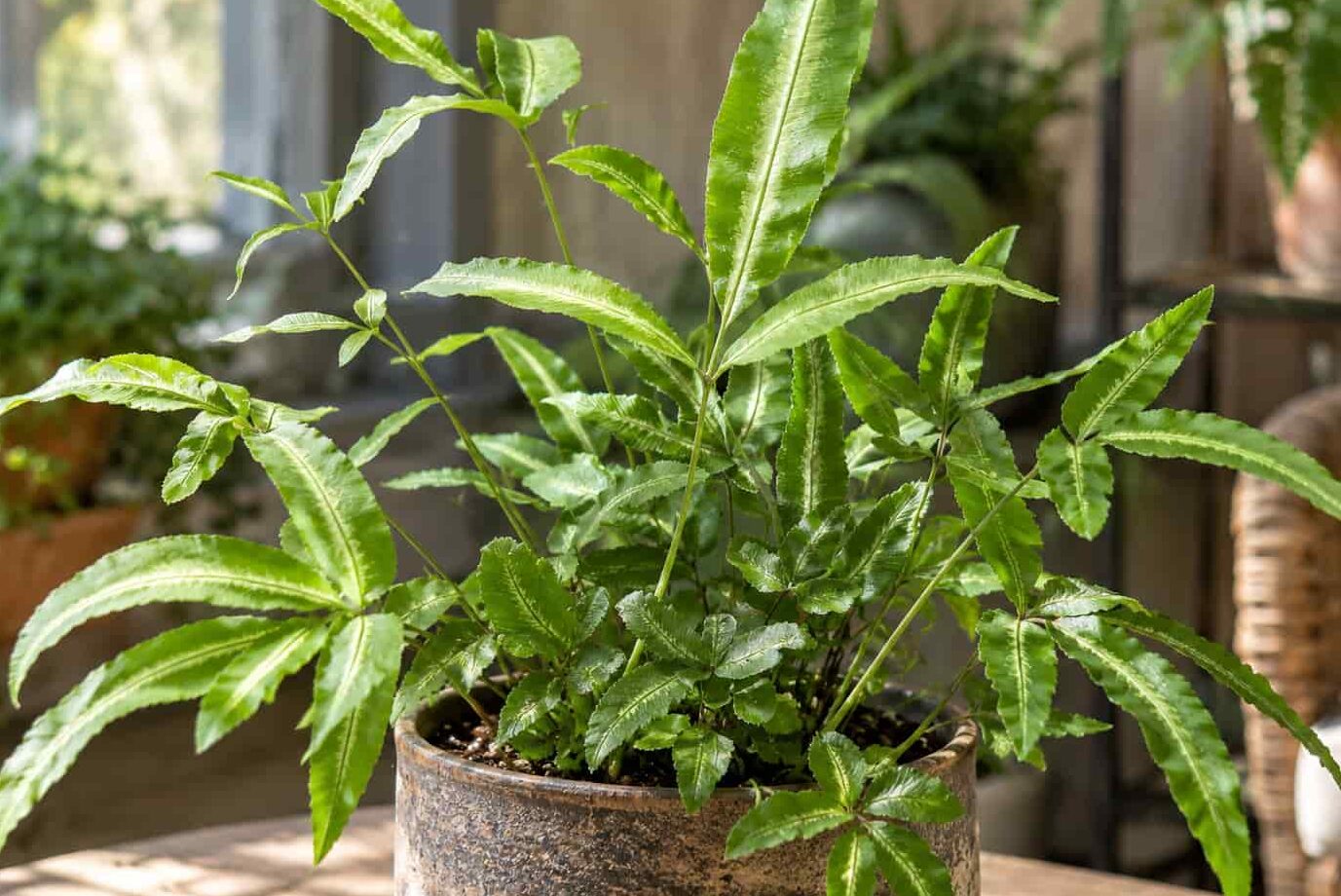
Ribbon Fern earns its name honestly. Its long, slender fronds are strap-like and slightly leathery, arching outward in a tidy clump that looks more like green ribbon than typical feathery fern foliage. Native across parts of Europe, Asia and Africa, this fern has long been grown in shaded gardens and conservatories and remains popular today as a houseplant.
What It Looks Like
The species itself has plain green fronds, but several cultivars add extra interest. ‘Albolineata,’ often sold as the Silver Ribbon Fern, has a creamy white or silver stripe running down the center of each leaflet. Looking closely at a mature plant, you may notice two kinds of fronds: sterile leafy ones that stay low and arching, and taller, more upright fertile fronds that carry the plant’s spores along their edges.
How to Grow It
Ribbon Fern is forgiving compared with many of its fern relatives. It does best in bright, indirect light or partial shade and tolerates fairly low light, though it grows best in bright, indirect light. Keep the soil evenly moist but not soggy, and never allow the pot to sit in water. It also appreciates moderate to high humidity. A naturally humid room, such as a bathroom with good light, can help prevent brown, dry frond tips.
Give it a moist, well-drained, humus-rich potting mix, and repot in spring once the roots fill the container, being careful not to bury the rhizomes too deeply. Trim off old or shabby fronds as they appear to keep the plant looking fresh and encourage healthy new growth. Propagation is straightforward by dividing the rhizomes in spring. The plant can also reproduce by spores, which form in narrow lines along the undersides of the fertile frond margins, partly protected by the folded leaflet edges. To try it yourself, tap a mature fertile frond over a sheet of paper to collect the spores, then sow them on top of moist, sterile potting mix and cover the tray to hold in humidity. Spores may take several weeks to germinate, so most growers rely on rhizome division rather than spore propagation.
Pests are rarely a serious problem, though it is worth watching for aphids, mealybugs and scale.
At a Glance
| Common name | Ribbon Fern (also called Cretan Brake or Silver Ribbon Fern) |
| Botanical name | Pteris cretica |
| Family | Pteridaceae |
| Native range | Europe, Asia and Africa |
| Light | Bright indirect light to partial shade; tolerates fairly low light |
| Water | Keep evenly moist but not waterlogged; do not allow the root ball to dry completely |
| Humidity | Moderate to high; a naturally humid room is beneficial |
| Temperature | 60 to 75°F (15 to 24°C) |
| Soil | Moist, well-drained, humus-rich potting mix |
| Propagation | Rhizome division in spring, or by spores |
| Pests | Aphids, mealybugs, scale |