Plant of the Month
Dahlia ‘Hypnotica Electric Pink’
Dahlinova Hypnotica Series · Decorative Dahlia
Fully double, container-ready, blooms from June until frost
Dahlia ‘Hypnotica Electric Pink’ belongs to the Dahlinova Hypnotica series, a line of tuberous dahlias introduced by Fides and Oro, now part of Dümmen Orange. The series was bred for compact growth, container performance, and continuous bloom in borders, beds, and pots, keeping the flowers large while reducing overall plant size and improving branching.
Cultivars in the series share broadly similar care needs, though they may vary somewhat in vigor, size, timing, and flower color. Hypnotica dahlias produce large, fully double flowers on mounding plants that usually stay under 16 to 18 inches tall and branch freely, usually without pinching or staking. When purchased as established plants or started indoors early, they can bloom from early summer until frost. Tubers planted directly outdoors in Western New York usually begin flowering later in summer and continue until frost.
Like all dahlias, they descend from species native to Mexico and Central America, many of them adapted to sunny, well-drained conditions and seasonal dormancy.
What It Looks Like
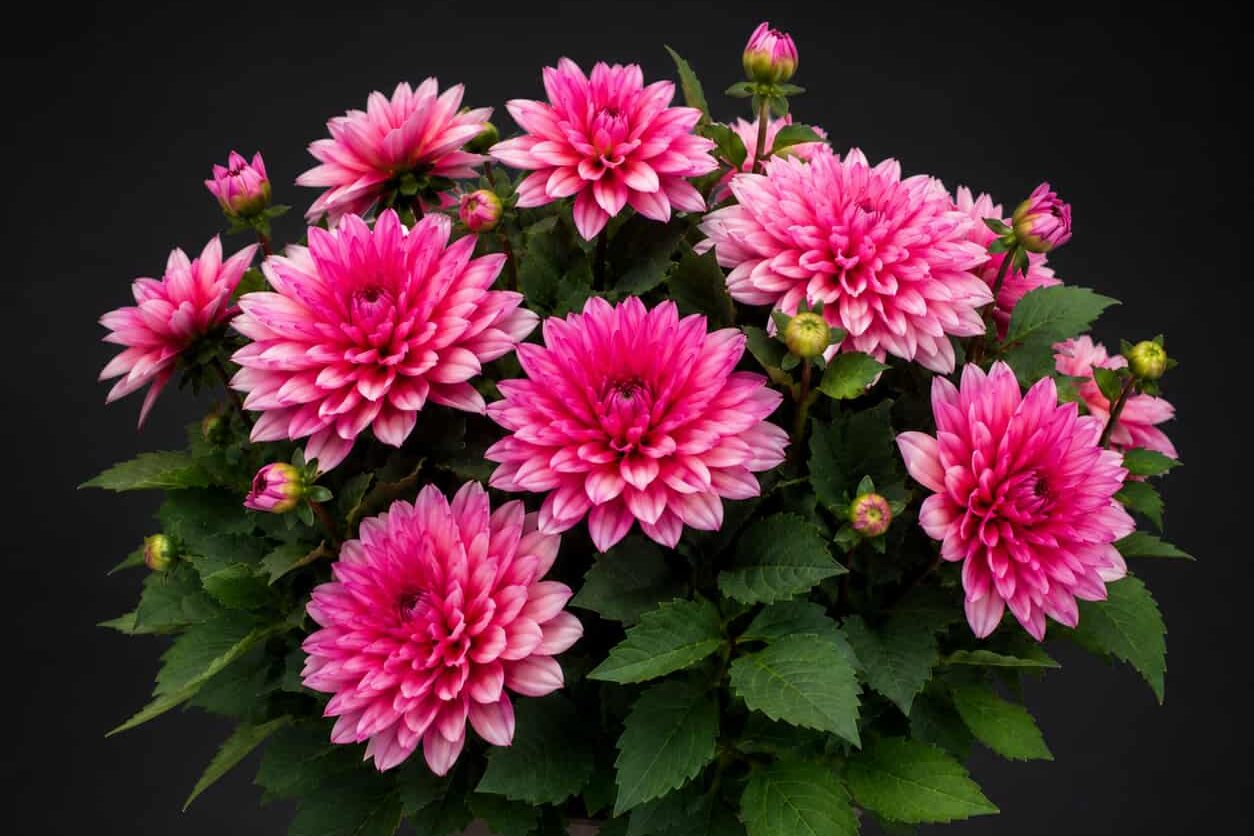
Hypnotica dahlias are classified as decorative dahlias, a flower form defined by fully double blooms with broad, flat-tipped petals arranged in a consistent spiral, giving each flower a dense, layered appearance. The blooms are large relative to the plant’s size and foliage is dark green and serrated.
The plant habit is upright and mounding, typically 10 to 18 inches tall with a similar spread. It branches well and sets buds continuously. The series attracts bees and butterflies throughout its bloom season. Although dahlias are not usually a first-choice food for deer or rabbits, they are not reliably deer-proof, especially where browsing pressure is high.
The Hypnotica series is available in a wide and expanding range of colors, including pink, red, orange, white, lavender, yellow, and several bicolors. Availability varies by retailer and season.
At a Glance
| Plant type | Tuberous perennial; grown as annual in Zones 3–7 |
| Native range | Species native to Mexico and Central America |
| Bloom time | (Early) summer through frost |
| Flower form | Decorative with fully double, flat-tipped petals |
| Colors available | Pink, red, orange, white, lavender, yellow, and bicolors |
| Mature size | 10–18 inches tall · 12–18 inches wide |
| Light | Full sun: 6 to 8 hours minimum |
| Hardiness | Perennial in Zones 8–10; tubers should be lifted in Zone 6 |
| Pet safety | Mildly toxic to dogs, cats, and horses; usually associated with mild GI upset or skin irritation. Low risk to humans. |
How to Grow It
Planting
Plant after all danger of frost has passed, mid-May to early June in Orchard Park. Choose the sunniest available location. Fewer than six hours of direct sun results in reduced flowering, weaker stems, and increased disease susceptibility.
Plant tubers four to six inches deep, laid horizontally with the eye (the small bud at the point where the tuber meets the old stem) pointing upward. A tuber without a viable eye will not produce a plant. After planting, do not water until green shoots appear above the soil. The tuber holds enough stored moisture to germinate, and watering before growth begins is the most common cause of early rot.
To get a head start, tubers can be potted indoors four to six weeks before the last frost date, kept in a warm, sunny location, and transplanted out once nighttime temperatures are reliably above freezing.
Soil
Well-drained, fertile soil is essential. Dahlias are highly susceptible to root rot in wet or compacted conditions. Amend heavy clay soil with compost and perlite before planting, or grow in raised beds or containers where drainage can be controlled. Target a soil pH of 6.5 to 7.0.
Watering
Water when the top inch of soil feels dry. Avoid keeping the soil constantly wet. In containers during hot weather, daily watering is often necessary. In the ground, established plants may need supplemental water only during dry spells. Consistent moisture matters more than frequency; wide swings between very dry and very wet soil stress the plant and encourage rot.
Feeding
Fertilize every two weeks during the growing season. Use a low-nitrogen formula or one balanced toward phosphorus and potassium once the plant is established. High nitrogen promotes foliage at the expense of flowers. A fertilizer labeled for flowering annuals or tomatoes works well.
Pinching and Deadheading
Pinching the central growing tip when plants reach six to eight inches encourages branching and a more compact habit, though the Hypnotica series branches freely on its own and many gardeners skip this step. Deadheading is not required, but it is strongly recommended if you want the longest bloom display. When deadheading, trace the spent flower stem down to the first strong set of leaves or side shoot and cut just above that point. Avoid simply snipping off the flower head and leaving a bare stem.
Staking
Staking is not required for this series under normal growing conditions. On very exposed sites or in overly rich soil, stems can weaken, in which case a single stake or small peony cage usually resolves the issue.
Lifting and Storing Tubers
In Zone 6, dahlia tubers cannot survive winter in the ground. Treating them as annuals is a legitimate option. The Hypnotica series is widely available each spring as potted transplants. Saved tubers can produce vigorous plants in future years, especially if they are healthy, properly stored, and divided so each piece has a viable eye.
In Fall
After the first hard frost blackens the foliage, leave the plant in the ground for one to two weeks before digging. This brief wait helps cure and toughen the skin of the tubers. Cut stems back to three to four inches, then dig carefully, starting at least a foot from the base. The root ball can be twelve to eighteen inches across. Work slowly as tubers are brittle, and damaged ones are more prone to rot in storage.
Let the clumps air dry for one to two days. Pack them loosely in paper bags, cardboard boxes, or breathable bins with barely damp peat moss or vermiculite to prevent shriveling. Keep the tops loosely open for air circulation.
Store at 40 to 50 °F in a cool, dark location, check monthly, and discard any tubers showing soft rot. Lightly mist any that have begun to shrivel.
In Spring
Inspect tubers before replanting. Each division needs at least one eye to produce a new plant; the eye is the small bud at the point where the tuber attaches to the old stem. Waiting until the eyes begin to swell naturally in early spring makes them easier to identify before dividing. Plant out again after the last frost date.
A Few More Tips
- In containers, use a quality potting mix with added perlite. Drainage matters more than soil richness.
- Yellow leaves mid-season usually mean overwatering, poor drainage, or nutrient deficiency. Check roots before adding fertilizer.
- As a cut flower, harvest stems in the early morning when blooms are just fully open. Recut stems and place immediately in water.
- Good companion plants that share similar care requirements include marigolds, salvia, and snapdragons.
Growing It as an Annual
For gardeners who prefer not to dig and store, the Hypnotica series performs reliably when purchased fresh each spring as potted transplants. The series is bred for consistent performance and transplants establish quickly. Replanting annually also eliminates the risk of tuber loss to rot or disease during storage.
Plant of the Month is a regular feature of OPGC meetings. Have a plant suggestion for a future meeting? Get in touch.