Plant of the Month
Hoya carnosa
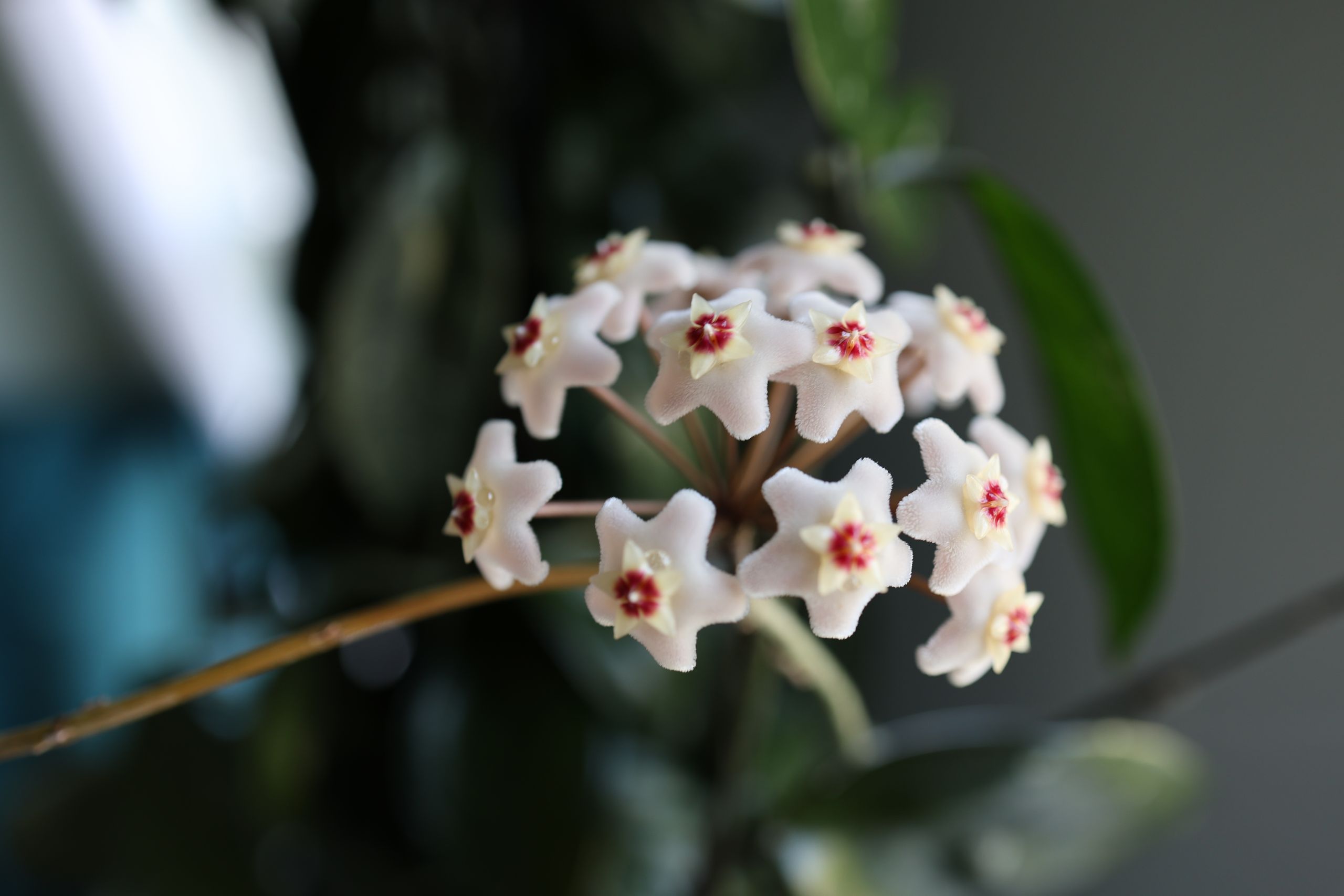
Hoya carnosa · Waxy leaves and star-shaped blooms on an easygoing trailing vine
An easygoing houseplant made for sharing
Some plants mean more to us than others. They may have come from a family member or a friend, or simply shared our homes for many years. Taking a cutting from a treasured plant can preserve a favorite for years to come, keeping its connection and history alive even when the older plant becomes leggy, overgrown, or begins to decline.
Sharing cuttings is a wonderful way to preserve favorite houseplants and pass them from one generation to the next. You can’t find a plant with that kind of history on a store shelf.
Hoya is an especially easy plant to share. A short stem cutting will root in water or moist potting mix without much fuss, which makes it a good choice for beginners and a popular plant to trade.
Meet the Hoya
Often called wax plant, hoya is a trailing or climbing vine with thick, glossy leaves and clusters of small, star-shaped flowers that look as if they were made of wax. Native to eastern and southeastern Asia, it has been a favorite indoor plant for generations. The genus includes hundreds of species, and Hoya carnosa is the familiar classic and one of the most widely grown.
What It Looks Like
The vines are long and woody with age, with oval, fleshy leaves arranged in pairs along the stem. Some varieties have variegated leaves edged in cream or pink, and others have curled or twisted foliage. The flowers open in rounded clusters called umbels. Blooms are usually pink or white, often with a contrasting center, and many are fragrant, especially in the evening. They may also drip sweet, sticky nectar, so keep that in mind when choosing a spot over a table or windowsill.
How to Grow It
Hoya is forgiving and generally does better with a light hand than with too much water or fussing. It does best in bright, indirect light. A few hours of morning sun is fine, but hot afternoon sun can scorch the leaves. In low light it will survive but is unlikely to bloom.
Water thoroughly, then let the soil dry out before watering again. Overwatering is the most common problem, and soggy soil leads to root rot. Plants may need less water in winter. Use a loose, fast-draining mix, such as potting soil blended with orchid bark and perlite.
Average household temperatures suit it well. In Western New York, it can spend summer outdoors in a sheltered, shady spot, but bring it inside well before nights drop below 50°F.
Hoya tolerates being slightly pot-bound, so there is no need to repot frequently. Move it up only when the roots have filled the pot. Let the vines climb a small trellis or hoop, or trail from a hanging basket.
Do not cut off the flower stalks after the blooms fade. The same short spur produces new flowers year after year.
To propagate, take a stem cutting with one or more nodes and root it in water or moist potting mix. Watch for mealybugs, aphids, scale, and spider mites.
At a Glance
| Common name | Hoya, Wax Plant |
| Botanical name | Hoya carnosa |
| Family | Apocynaceae |
| Native range | Eastern and southeastern Asia |
| Light | Bright indirect light; some morning sun is fine |
| Water | Water thoroughly, then let the soil dry out before watering again |
| Humidity | Average household humidity is usually adequate; moderate humidity is preferred |
| Temperature | 60 to 80°F (15 to 27°C); bring indoors before nights fall below 50°F |
| Soil | Loose, fast-draining mix |
| Propagation | Stem cuttings with one or more nodes |
| Pests | Mealybugs, aphids, scale, spider mites |