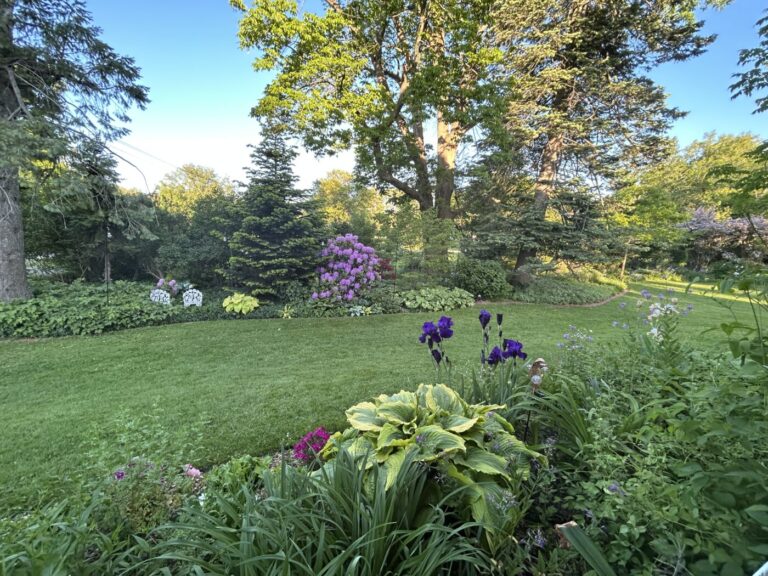
Hostas: Stars of the Shade Garden
A presentation by Michael Shadrack, co-author of The New Encyclopedia of Hostas
April 2026
Hostas are among the most versatile and widely grown shade-tolerant perennials in cultivation. At the Orchard Park Garden Club’s April meeting, members were treated to an in-depth presentation by Michael Shadrack, longtime American Hosta Society member, president of the Western New York Hosta Society, and co-author of three books on the genus, including The New Encyclopedia of Hostas, the Timber Press Pocket Guide to Hostas, and The Book of Little Hostas. His enthusiasm for hostas is contagious, and his talk left many members seeing their shady garden corners in a whole new light.
From towering specimens to jewel-like miniatures, cool blue-green tones to glowing gold and crisp white variegation, hostas deliver structure, texture, and season-long color in spots where little else performs as reliably. They are purchased and planted primarily for their foliage, which looks good from late spring until the first frosts of winter. The flowers, while a pleasant bonus, are decidedly secondary.
A Wide Range of Foliage Colors
Hostas are grouped by foliage color and pattern: green, blue, gold, medio-variegated (light centers with darker margins), and marginally variegated (light margins with darker centers). Within each group, the variation is striking.
Blue hostas owe their color to a waxy leaf coating that thrives in deeper shade. Push them into more sun, and that coating gradually breaks down, revealing ordinary green beneath. Gold and yellow varieties work the opposite way, needing more light to develop their richest color. White-centered variegated types tend to grow more slowly, since less chlorophyll means less photosynthetic horsepower.
From Giants to Miniatures
Mature hostas range from miniature (under 8 inches) through small, medium, large, and giant (over 30 inches), with the largest varieties producing leaves the size of dinner plates. At the compact end, their tidy growth makes them naturals for containers, patios, and smaller garden spaces.
Leaf form is equally varied: deeply heart-shaped and corrugated, long and narrow, ruffled, twisted, or nearly circular. Some bear fragrant flowers. There are hostas to please every taste.
Sports, Hybridizing, and Propagation
Hostas are prone to “sporting,” spontaneous mutations in which a single shoot emerges looking noticeably different from the rest of the plant, often in leaf color or variegation. Many well-known cultivars got their start exactly this way. New varieties can also be developed through hybridizing, though seedlings are genetically variable and rarely resemble their parents. Most are unremarkable, but the occasional standout makes the gamble worthwhile.
For reproducing existing cultivars, division is the go-to method: dig up an established clump in early spring and split it into sections, each with roots and at least one growing point. It’s simple, reliable, and preserves the cultivar exactly. Commercial nurseries typically use tissue culture to achieve the same result at scale.
Pests: Slugs, Snails, and Deer
Slugs and snails are the most persistent hosta pests, feeding at night and leaving ragged holes and slime trails behind. Applying organic slug bait as shoots emerge in spring, and reapplying after heavy rain, is the most effective defense. Varieties with thick, heavily textured leaves hold up better than thin-leaved types.
Deer are a different problem entirely, capable of leveling an entire planting overnight. Repellents help but need constant reapplication; fencing is the most reliable long-term solution. Siting hostas closer to the house and foot traffic can also discourage browsing.
Diseases to Watch For
Hostas are generally tough, but two diseases deserve attention. Hosta Virus X (HVX) causes mottled, distorted foliage and has no cure; infected plants must be dug out and destroyed, and tools should be cleaned between uses to prevent spread. Fungal diseases like anthracnose can develop during warm, wet spells, showing up as brown leaf spots. Good spacing, air circulation, and avoiding overhead watering go a long way toward prevention.
Watering, Fertilizing, and Frost Protection
Hostas prefer consistently moist, well-drained soil, about an inch of water per week through the growing season, delivered at the base when possible. One application of balanced slow-release fertilizer in spring is typically all they need; skip late-season feeding, as it pushes tender new growth that frost will punish.
Late spring frosts can scorch emerging leaves, but hostas bounce back reliably once temperatures stabilize. Cover emerging shoots during predicted cold snaps if you want to stay ahead of it.
Winter Care
Hostas are hardy in USDA Zones 3 through 9 and handle winter dormancy without much fuss. After the first hard frost, cut foliage back to about an inch above the soil and discard any diseased material. A light layer of mulch helps insulate the crown, but keep it pulled back from the base to avoid moisture buildup and rot. Come spring, clear the mulch before new growth pushes through.
Container-grown hostas need a bit more attention, as their roots are more exposed to freeze-thaw cycles. Move pots to a sheltered, unheated space like a garage or shed for the winter.
Want to go deeper? The New Encyclopedia of Hostas by Diana Grenfell and Michael Shadrack is one of the most comprehensive references available, and the Timber Press Pocket Guide to Hostas is an affordable companion for gardeners ready to expand their collection.